
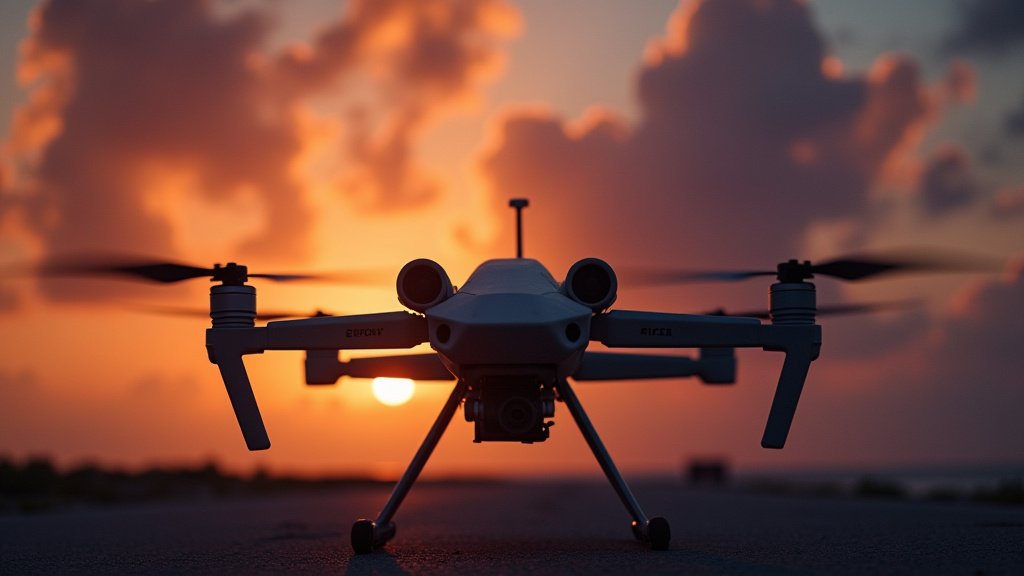
The United States has recently showcased advanced drone technology to Eastern Caribbean security leaders, underscoring a commitment to enhancing regional safety and surveillance capabilities. This initiative aims to equip partner nations with cutting-edge tools to combat transnational threats such as illicit trafficking, illegal fishing, and piracy.
Key Highlights:
- Demonstration of advanced U.S. drone capabilities.
- Focus on bolstering Eastern Caribbean security and surveillance.
- Aimed at combating transnational threats like drug trafficking and illegal fishing.
- Strengthens U.S. partnerships in the Caribbean region.
Enhancing Regional Surveillance with Advanced Drones
The U.S. government, through collaborative efforts with regional security forces, has initiated a program to introduce state-of-the-art unmanned aerial vehicles (UAVs) to Eastern Caribbean nations. This strategic move is designed to significantly upgrade the region’s capacity to monitor its vast maritime territories and respond effectively to a spectrum of security challenges. The demonstrations highlighted the drones’ versatility, showcasing their potential for intelligence, surveillance, and reconnaissance (ISR) missions, as well as disaster response and maritime domain awareness.
Collaborative Security Initiatives
This program is a cornerstone of the broader U.S. strategy to foster a more secure and prosperous Caribbean. By sharing advanced technology and providing training, the U.S. aims to empower local law enforcement and coast guard agencies. The objective is to enable them to conduct more effective patrols, interdict illegal activities, and maintain a constant presence in their exclusive economic zones. The drones are expected to offer extended flight times, superior sensor capabilities, and real-time data transmission, providing an unprecedented level of situational awareness.
Combating Transnational Criminal Threats
Transnational criminal organizations pose a persistent threat to the stability and economic well-being of the Eastern Caribbean. These groups are involved in the smuggling of narcotics, weapons, and human trafficking, often utilizing the region’s extensive coastlines and archipelagic nature for their operations. The introduction of advanced drone technology is seen as a critical tool to disrupt these illicit networks. The UAVs can provide persistent surveillance over remote areas, track suspicious vessels, and gather crucial evidence, thereby aiding in the apprehension of criminals and the seizure of illegal contraband. This technological enhancement is expected to significantly deter illicit maritime activities.
Disaster Response and Humanitarian Aid
Beyond security applications, the demonstrated drone technology also holds significant potential for disaster management and humanitarian assistance. The Eastern Caribbean is particularly vulnerable to natural disasters such as hurricanes and tropical storms. Drones equipped with advanced imaging sensors can quickly assess damage in affected areas, identify populations in need of aid, and facilitate the coordination of relief efforts. Their ability to operate in challenging conditions and provide aerial perspectives makes them invaluable assets during emergency response operations. This dual-use capability highlights the comprehensive benefits of the U.S. initiative.
FAQ: People Also Ask
What types of drones were demonstrated?
The demonstrations likely showcased a range of drones, including fixed-wing for long-endurance surveillance and rotary-wing for versatile, localized observation, equipped with advanced electro-optical and infrared sensors.
How will these drones be used by Eastern Caribbean nations?
They will be utilized for maritime patrol, border surveillance, interdiction of illegal activities (like drug smuggling and illegal fishing), search and rescue operations, and disaster assessment.
What is the U.S. objective in providing this technology?
The primary objective is to enhance regional security, combat transnational crime, improve maritime domain awareness, and strengthen partnerships between the U.S. and Eastern Caribbean nations.
Are there plans for training and maintenance support?
Yes, typically such technology transfers include comprehensive training programs for operators and maintenance personnel, along with ongoing technical support from the U.S.
What are the main transnational threats in the Eastern Caribbean?
Key threats include drug and human trafficking, illegal fishing, arms smuggling, and piracy, all of which impact regional stability and economic development.